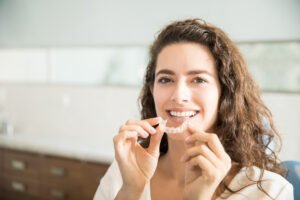
invisalign for crowding mild-vs-severe

invisalign for crowding mild-vs-severe

Teeth crowding is one of the most common orthodontic concerns, and many people want to know whether Invisalign can fix crowded teeth. While Invisalign is highly effective for certain cases, results depend largely on how mild or severe the crowding is.

This article explains what’s realistic when using Invisalign for crowding, the difference between mild and severe cases, and how orthodontists determine whether Invisalign is the right choice for you.

What Is Dental Crowding?

Dental crowding occurs when there isn’t enough space in the jaw for all teeth to align properly. This causes teeth to overlap, rotate, or shift forward or backward.

Common causes of crowding:

  • Small jaw size
  • Large teeth
  • Early or late loss of baby teeth
  • Genetics
  • Poor oral habits

Crowding can affect both appearance and oral health, increasing the risk of cavities and gum disease.

Can Invisalign Fix Crowded Teeth?

Yes—Invisalign can treat crowded teeth, but the success depends on the severity of the crowding and proper treatment planning.

Invisalign uses controlled, gradual force to move teeth into better alignment. However, aligners have limitations compared to braces in extremely complex cases.

Invisalign for Mild Crowding

Mild crowding is the most ideal scenario for Invisalign treatment.

What counts as mild crowding?

  • Minor overlap of teeth
  • Slight rotations
  • Small spacing issues combined with crowding
  • Minimal bite involvement

Advanced Invisalign systems can also treat more complex cases when handled by experienced orthodontists.

What to expect with Invisalign:

  • Shorter treatment time (6–12 months)
  • Fewer aligners
  • Minimal discomfort
  • Highly predictable results

For mild crowding, Invisalign often delivers excellent aesthetic and functional outcomes.

Invisalign for Moderate Crowding

Moderate crowding falls in the middle and can still be successfully treated with Invisalign—especially under expert supervision.

Characteristics of moderate crowding:

  • Noticeable overlapping
  • Tooth rotations
  • Some bite misalignment
  • Limited space in the jaw

Treatment approach:

  • Use of attachments for better control
  • Possible interproximal reduction (IPR)
  • Longer treatment duration (12–18 months)

With proper planning, Invisalign can be very effective for moderate crowding cases.

Invisalign for Severe Crowding: What’s Realistic?

Severe crowding is where expectations need to be carefully managed.

Signs of severe crowding:

  • Teeth severely overlapping or twisted
  • Teeth pushed out of the arch
  • Significant bite problems
  • Lack of space in the jaw

Is Invisalign possible?

In some severe cases, Invisalign can still work, but:

  • Treatment may take longer
  • Refinements are common
  • Tooth extractions may be required
  • Results may be partial or combined with braces

In many severe cases, traditional braces may offer more predictable results.

Invisalign vs Braces for Severe Crowding

For severe crowding, orthodontists often compare Invisalign with braces.

Invisalign advantages:

  • Better aesthetics
  • Removable for hygiene
  • Comfortable

Braces advantages:

  • More control over complex movements
  • Better for major bite corrections
  • Often faster for severe cases

The right choice depends on clinical findings, not just preference.

Factors That Affect Invisalign Success for Crowding

Several factors influence whether Invisalign is realistic for crowding:

  • Severity of crowding
  • Jaw structure
  • Patient age
  • Compliance (20–22 hours/day wear)
  • Orthodontist’s experience
  • Use of attachments or IPR

A personalized evaluation is essential.

What an Orthodontist Will Evaluate

During your Invisalign consultation, the orthodontist assesses:

  • Digital scans and X-rays
  • Amount of space available
  • Tooth and root positioning
  • Bite relationship
  • Overall oral health

This determines whether Invisalign alone is sufficient or if alternative treatments are needed.

Conclusion

Invisalign for crowding works best for mild to moderate cases, offering predictable, comfortable, and discreet treatment. For severe crowding, Invisalign may still be an option—but often with longer timelines, additional procedures, or alternative treatments like braces.

The key is a professional orthodontic assessment to set realistic expectations and choose the safest path to a healthier smile.

Not sure how severe your crowding is?

Book an Invisalign consultation today to find out what’s realistic for your smile.

invisalign-hyderabad.com
Privacy Overview

This website uses cookies so that we can provide you with the best user experience possible. Cookie information is stored in your browser and performs functions such as recognising you when you return to our website and helping our team to understand which sections of the website you find most interesting and useful.